
KVA is a measure of demand load while KWH is a measure of usage. India's per-capita consumption is 750 KWH or 750 units, while the world average is 1,000 KWH per annum. A 40W tube can consume one KWH power in 250 hours. Power for illuminating the bridge would be supplied by Brihanmumbai Electric Supply and Transport and Reliance Power.
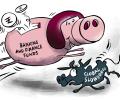
Even as banks and finance companies are reporting record-high earnings, their weighting in the benchmark National Stock Exchange Nifty50 Index has seen a downward trajectory. Investors expect a stronger performance from other sectors in the new year. Currently, banking, financial services and insurance (BFSI) companies collectively hold a weighting of 34.5 per cent, down from 36.7 per cent at the end of December 2022 and a record high of 40.6 per cent at the end of December 2019. This represents the sector's lowest weighting in the index since December 2021 when it stood at 33.7 per cent.

Stock market investors became poorer by Rs 8.30 lakh crore as equities continued their slide for the sixth consecutive day on Friday. The BSE Sensex has tumbled 1,855.58 points or 3 per cent since February 16. During this period, the combined market capitalisation of BSE-listed firms has tanked Rs 8,30,322.61 crore to reach Rs 2,60,00,662.99 crore. "The domestic market is broadly demonstrating a lack of confidence, registering its sixth consecutive day of losses despite global markets turning green.

Loan against gold as a product is catching on fast. Let's keep the momentum going, but aim for sustainable growth. A few bad apples should not ruin the brunch, argues Tamal Bandyopadhyay.
The market capitalisation of BSE-listed firms reached an all-time high of Rs 299.90 lakh crore on Wednesday despite the Sensex falling marginally after a remarkable record-breaking rally in the last few trading sessions. The 30-share BSE Sensex dipped 33.01 points or 0.05 per cent to settle at 65,446.04, after rallying in the past five trading straight sessions. During the day, the benchmark hit a low of 65,256.49 and a high of 65,584.33.

Higher disposable incomes, rural push and infra push to boost auto sector

Urban markets account for the major share of total revenues.

Among major Sensex shares, PowerGrid fell the most by 2.76 per cent. IndusInd Bank dropped 2.34 per cent, HUL by 2.23 per cent and NTPC by 2.04 per cent. ICICI Bank, HDFC Bank, HDFC, ITC, Infosys, L&T, Bajaj Finance, Kotak Bank, HCL Tech and Tech Mahindra were among the losers. On the other hand, Tata Motors rose the most by 2.94 per cent, followed by Titan which gained 1.26 per cent. Mahindra & Mahindra, SBI and TCS were also among gainers.
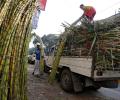
Sugar prices are hovering near six-year highs, leaving a bad taste in Indian consumers' palates but sweetening the portfolios of investors in related stocks at Dalal Street. Shares of sugar manufacturers such as Piccadily Agro, DCM Shriram, Magadh Sugar, and Bajaj Hindustan have rallied up to a whopping 200 per cent so far in the financial year 2024 (FY24) as deficient monsoon rains in major sugarcane producer states like Maharashtra and Karnataka are expected to lead to a shortfall in sugar output ahead. In comparison, the BSE Sensex has modestly gained 11 per cent during this period.
.jpg)
A discount on the product may make a credit card loan seem cheaper than a consumer durable loan. But missing a payment in case of the former will mean exorbitant charges.
Benchmark equity indices Sensex and Nifty closed higher on Friday after two days of fall, helped by buying in metal, telecom and auto stocks amid a firm trend in global markets. Automakers led by Maruti Suzuki India, Hyundai, Mahindra & Mahindra reporting robust wholesales of passenger vehicles and GST collections crossing Rs 1.50 lakh crore for the third straight month in May also added to the optimism. The 30-share BSE Sensex climbed 118.57 points or 0.19 per cent to settle at 62,547.11.

PowerGrid was the top loser in the Sensex pack, shedding around 3 per cent, followed by Asian Paints, Axis Bank, Kotak Bank, Bajaj Auto, SBI and M&M.

The BSE Sensex maintained its winning run for the fourth session on the trot on Wednesday to reclaim the 60,000-level after a gap of over four months as investors remained upbeat amid softening crude oil prices and persistent foreign fund inflows. A strengthening rupee and positive Asian markets further bolstered sentiment, traders said. The 30-share BSE benchmark jumped 417.92 points or 0.70 per cent to settle at 60,260.13 -- closing above the psychologically key 60,000-mark for the first time since April 5 this year.

With raw material prices rising sequentially in Q4 FY23, margins of fast moving electrical goods (FMEG) companies could witness pressure as they refrain from hiking prices and demand remains soft. Transition to a new regulatory regime-fans moved to new BEE standards from January 1-poses additional risk for firms. Business depends on volume trends in summer for key sub-segments, which account for a significant chunk of the sector's overall sales pie.

Equity benchmarks Sensex and Nifty gave up early gains to close in the red on Wednesday after a selloff in power, metal and consumer durable stocks amid a weak trend in global equities. However, a rally in the rupee against the US dollar and unabated foreign capital inflows helped the indices restrict the losses, traders said. In a largely range-bound session, the 30-share BSE Sensex ended 151.60 points or 0.25 per cent lower at 61,033.55.

The Sensex and Nifty ended at fresh lifetime peaks on Tuesday amid a largely firm trend in other Asian markets and continuous foreign fund inflows. The 30-share BSE Sensex gained 177.04 points or 0.28 per cent to settle at 62,681.84, its fresh record closing high. During the day, it jumped 382.6 points or 0.61 per cent to its lifetime intra-day peak of 62,887.40.
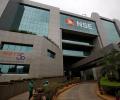
The new entrants comprise Asian Paints, Britannia, Titan, Nestl, Bajaj Finance and Bajaj Finserv.

The government expects indirect tax collection to be lower than the Budget Estimate (BE) of Rs 13.38 trillion this fiscal year, despite prospects of netting goods and services tax (GST) in large amounts, Revenue Secretary Tarun Bajaj has said. "Indirect tax collection may see lower realisation than budgeted on account of cuts in excise and customs duties. "We could see a shortfall of about Rs 1.5 trillion on account of those," he told Business Standard.

Starting with a family, which had a dealership of Bajaj Auto's scooters, to becoming the owner of a household name in consumer appliances who could afford to have Bollywood superstar Shah Rukh Khan as the brand ambassador, Venugopal Dhoot's is a story of an aggressive small town businessman's pursuit to be on the top. Now arrested in connection with the ICICI Bank loan fraud case, Venugopal Dhoot during his heydays was not the one to simply sit on small achievements like Videocon becoming the largest television set manufacturer in India.

Even though electric two wheeler (e2W) companies saw a slight recovery in July of 12 per cent with 49,518 registrations - after a wash out in June because the government slashed the FAME 2 subsidy by a third - registrations are still lower for the second month in a row compared to April FY24. The slow pace has raised doubts about whether the registrations will reach anywhere near either Niti Aayog's ambitious target of 2.4 million vehicles in FY24 or whether they will be closer to the trimmed down industry expectation of around one million. In June, e2W registrations plunged to a mere 44,253, the worst month in more than a year, as companies hiked scooter prices.

Investors' wealth eroded by over Rs 4.90 lakh crore on Friday amid a sharp fall in equities. The 30-share BSE Sensex tanked 1,020.80 points or 1.73 per cent to settle at 58,098.92. During the day, it tumbled 1,137.77 points or 1.92 per cent to 57,981.95. The market capitalisation of the BSE-listed firms plummeted by Rs 4,90,162.55 crore to Rs 2,76,64,566.79 crore on Friday.
Electric two-wheelers have zipped past the half-a-million registration mark and achieved a market penetration of 4 per cent at the fag end of Calendar 2022, according to data released by VAHAN. According to VAHAN data for the year (until December 27), 560,000 two-wheelers were registered in the country, up a staggering fourfold over 2021, when only 136,000 were registered, and when electric vehicle penetration was a mere 1.05 per cent. The total number of two-wheelers (internal combustion engine, or ICE, and electric) registered so far in 2022 stands at 14.5 million, up only 12.7 per cent over the previous calendar year.

From paints to apparel and lifestyle majors, brewers, distillers and fragrance makers have stepped into the market, even as the frontline companies including FMCG players, pharma and healthcare majors were the first to seize the opportunity created by Covid-19.
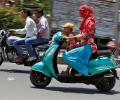
Automobile dealers' body FADA on Thursday sought a cut in GST on two-wheelers from 28 per cent to 18 per cent, saying the segment being essential for millions should not be categorised as luxury item. The industry body said it has appealed to the finance minister, chair of the GST Council, all GST Council members, the ministry of heavy industries, which supervises the automobile sector, and the ministry of road transport & highways. This timely and decisive intervention would help in making two-wheelers more affordable, reviving demand and reinvigorating an industry that has seen a significant slump in sales over the past few years, the Federation of Automobile Dealers Associations (FADA) said in a statement.

The migration of domestically developed intellectual property to foreign corporations within India reflects an anomaly in the demand pattern of the country's job market, points out Kanika Datta.

Equity investors became poorer by Rs 7.48 lakh crore in five consecutive days of market fall, where the BSE Sensex has declined by nearly 3 per cent. In the past five days, the BSE Sensex has tumbled 1,713.71 points or 2.79 per cent. This has led to an erosion of Rs 7,48,887.04 crore from the market capitalisation of BSE-listed firms in five trading sessions.
Two-wheeler exports from India fell by 17.8 per cent to 3.65 million units in 2022-23 (FY23), according to data released by the Society of Indian Automobile Manufacturers (Siam) on Thursday. This decline is due to a rise in global inflation and the weakening of economies and currencies in key export markets of Africa, Latin America (LatAm), and South Asia. In contrast to FY23, two-wheeler exports from India jumped 35.4 per cent to 4.44 million units in 2021-22 (FY22).

Among the Sensex firms, Bajaj Finserv, Tata Motors, Asian Paints, ITC, IndusInd Bank, State Bank of India, Tata Steel, Wipro, Infosys and Maruti were the major gainers. Tech Mahindra, HCL Technologies, Kotak Mahindra Bank, Titan and Larsen & Toubro were the major laggards.

While Jio MF will undoubtedly grow in size, it will have to cross multiple hurdles even to emerge as the market leader, observes Debashis Basu.
The Sensex finished above the psychologically key 60,000-mark while the Nifty surged past the 18,000-level on Monday on across-the-board buying amid a mixed trend overseas. A depreciating rupee and concerns over the US Federal Reserve hiking rates later this week failed to quell investors' appetite for stocks, traders said. The 30-share BSE Sensex rallied 786.74 points or 1.31 per cent to settle at 60,746.59.

The third-quarter financials didn't excite market watchers. But equity investors can still make money if they invest in the right stocks.

Benchmark indices started the trade on a weak note on Wednesday with the Sensex falling 564.77 points, following feeble global market trends and persistent foreign capital outflows. The 30-share BSE Sensex was trading 564.77 points lower at 52,612.68. The NSE Nifty dipped 162.4 points to 15,687.80. Among the Sensex pack, IndusInd Bank, Hindustan Unilever, Bajaj Finserv, Titan, Kotak Mahindra Bank and Bajaj Finance were the major laggards in early trade.

Ajit Mishra will answer Your Questions on the stock markets on a weekly basis. Please mail your questions to getahead@rediff.co.in with the subject line 'Stock Market Query' along with your name and Ajit will offer his unbiased views.

IndusInd Bank was the top loser in the Sensex pack, shedding around 3 per cent, followed by Dr Reddy's, NTPC, Maruti, Axis Bank, Bajaj Auto, Bharti Airtel and HDFC. NSE Nifty declined 76.15 points to 15,691.40.
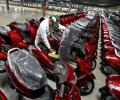
What has hit sentiment further is a draft proposal by the government to increase vehicle insurance premiums for financial year 2022-23 (FY23). Third-party motor insurance premiums have not been increased over the last two years and if this is approved, insurance costs for specific segments could rise by a fifth. The worst impacted is the 350cc and above two-wheeler segment, where premiums are up 21 per cent. Royal Enfield (Eicher Motor) is the market leader in the segment. The premiums in the 150-350cc two-wheeler category are also being inc

Benchmark BSE Sensex rose by about 322 points to close above the 60,000 level on Monday tracking gains in banking, IT and energy stocks amid positive global equities. The 30-share barometer closed higher by 321.99 pts or 0.54 per cent at a three-week high of 60,115.13, as 21 of the index constituents closed in the green. After a strong opening, the index touched a day's high of 60,284.55 and a low of 59,912.29.

'In the short term, we may see some disruptions due to Covid, but in the medium-to-long term, we should keep an eye on US inflation and 10-year bond yields.'

Benchmark indices ended on a flat note on Thursday as fag-end selling wiped out intra-day gains amid weak global trends. The BSE benchmark Sensex slipped 8.03 points or 0.02 per cent to settle at 53,018.94. During the day, it had gained 350.57 points or 0.66 per cent to 53,377.54. Similarly, the broader NSE Nifty fell 18.85 points or 0.12 per cent to close at 15,780.25.

NTPC was the top loser in the Sensex pack, shedding around 3 per cent, followed by M&M, Axis Bank, PowerGrid, Kotak Bank, Dr Reddy's, Bajaj Finserv and HDFC.

M&M was the top gainer in the Sensex pack, rallying nearly 6 per cent, followed by Bajaj Auto, Titan, Bajaj Finance, HDFC Bank and PowerGrid.
 © 2026 Rediff.com - Advertise with us - Disclaimer - Privacy Policy - Sitemap - Feedback - About us - Terms of use - Grievances